
Discover the Copper Peptide Powering Modern Skin Research
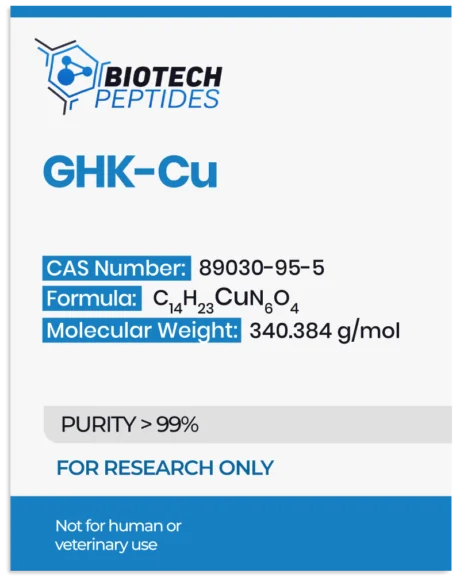
GHK-Cu (200mg) is a copper-binding peptide that has become one of the most recognised ingredients in modern cosmetic and peptide research. Known for its connection to skin appearance, collagen research, tissue biology, and cellular signalling, GHK-Cu continues to attract interest from researchers and cosmetic formulators. GHK-Cu For Sale
GHK-Cu combines a naturally occurring peptide called GHK, or glycyl-L-histidyl-L-lysine, with copper ions. This creates the copper peptide complex commonly known as GHK-Cu.
Research into GHK-Cu has explored its relationship with extracellular matrix components, collagen, wound biology, and skin remodelling. These properties have helped make copper peptides a popular subject in advanced skincare research.
If you are researching GHK-Cu 200mg, this guide explains what it is, how copper peptides are studied, potential cosmetic applications, and what to consider when evaluating the material.
Research and cosmetic note: GHK-Cu is widely studied in cosmetic and laboratory contexts. Research findings should not be interpreted as proof that every GHK-Cu product produces specific clinical results. Experimental materials should not be assumed to be approved medical treatments.
1. What Is GHK-Cu? Meet the Copper Peptide Behind Advanced Skincare
GHK-Cu is a copper complex formed when the tripeptide GHK binds with copper.
The GHK peptide contains three amino acids:
- Glycine
- Histidine
- Lysine
GHK occurs naturally in the human body and has been detected in biological fluids and tissues.
Copper is an essential trace element involved in many biological processes. When copper binds with GHK, it creates a distinctive peptide complex that has attracted attention in skin and tissue research. GHK-Cu For Sale
Why Copper Peptides Matter
Copper plays a role in several enzymes and biological pathways.
It is involved in processes related to:
- Connective tissue formation
- Antioxidant defense
- Cellular metabolism
- Enzyme activity
- Tissue maintenance
GHK-Cu research examines how the peptide-copper complex may interact with these biological processes.
What Does GHK-Cu 200mg Mean?
The term GHK-Cu 200mg refers to a preparation containing a stated quantity of 200 milligrams.
This is a measurement of material, not a recommended dosage.
For research and formulation purposes, the appropriate amount depends on the specific experimental design, concentration, and application.
2. The Science of GHK-Cu: Where Copper Meets Cellular Signalling
The scientific interest in GHK-Cu goes beyond its simple structure.
Researchers have investigated its relationship with extracellular matrix biology and skin remodelling.
The extracellular matrix is the network of proteins and molecules surrounding cells. It provides structural support and contributes to communication between cells.
GHK-Cu and Collagen Research
Collagen is one of the primary structural proteins found in skin.
It contributes to skin firmness and structural integrity.
Research involving GHK-Cu has explored pathways associated with collagen and other extracellular matrix components. GHK-Cu For Sale
This is one reason copper peptides have become popular in cosmetic research.
However, it is important to distinguish laboratory research from proven clinical outcomes.
A peptide being associated with collagen-related pathways does not automatically mean that every topical product will increase collagen production or eliminate wrinkles.
GHK-Cu and Fibroblasts
Fibroblasts are connective tissue cells that produce important extracellular matrix components.
These include collagen and other structural proteins.
Researchers have investigated GHK-Cu in relation to fibroblast activity and tissue remodelling.
This work has helped increase interest in GHK-Cu as a research ingredient for skin science.
3. GHK-Cu and Skincare: Exploring the Potential of Copper Peptide Technology
The popularity of GHK-Cu skincare has grown as consumers become more interested in peptide-based products.
Copper peptides are commonly associated with cosmetic products designed to support the appearance of healthy and youthful-looking skin.
GHK-Cu for Skin Appearance
Skin appearance is influenced by many factors.
These include:
- Age
- Sun exposure
- Hydration
- Environmental factors
- Collagen structure
- Natural skin renewal
GHK-Cu research focuses on several biological processes associated with skin structure and remodelling.
This has made it an interesting ingredient for cosmetic formulation research.
GHK-Cu and Fine Lines
Fine lines and wrinkles develop through multiple processes.
Collagen changes are one contributing factor.
Because GHK-Cu has been investigated in relation to extracellular matrix biology, researchers have explored its possible relevance to visible signs of skin ageing.
However, GHK-Cu should not be described as a guaranteed wrinkle removal ingredient.
Cosmetic outcomes can vary depending on the formulation, concentration, delivery system, skin condition, and other ingredients.
GHK-Cu and Skin Recovery Research
GHK-Cu has also been investigated in tissue- and wound-related research.
Scientists have explored its relationship with cellular repair processes and extracellular matrix remodelling.
These studies are one reason GHK-Cu continues to receive attention in regenerative biology research.
Human cosmetic results, however, depend on the specific formulation and route of application.
4. GHK-Cu (200mg): Quality, Formulation, and Research Considerations
When evaluating GHK-Cu 200mg, the stated quantity is only one factor.
Researchers and cosmetic formulators should also consider the quality and identity of the material.
Important information may include:
- Peptide identity
- Copper content
- Purity
- Molecular characterization
- Certificate of analysis
- Batch information
- Stability
- Solubility
- Formulation compatibility
- Storage requirements
Why GHK-Cu Purity Matters
Purity can influence both research results and formulation performance.
Unexpected impurities can affect experimental observations.
A certificate of analysis can provide useful information about a particular batch.
Researchers should review analytical documentation rather than relying only on product descriptions.
A 200mg label does not independently establish purity, effectiveness, or safety.
GHK-Cu Stability
Like many peptide ingredients, GHK-Cu requires appropriate handling.
Environmental factors can influence peptide stability.
Temperature, moisture, light exposure, formulation conditions, and storage duration may all matter.
Researchers and formulators should follow the storage instructions supplied with the specific material.
GHK-Cu in Cosmetic Formulations
GHK-Cu is commonly associated with topical cosmetic research.
It may be investigated in formulations such as:
- Facial serums
- Moisturizers
- Anti-aging creams
- Eye-area products
- Cosmetic treatment formulations
The final performance depends on the complete formulation.
A high-quality peptide can still perform poorly if the surrounding formulation is unstable or incompatible.
5. The Future of GHK-Cu Research: A New Chapter in Copper Peptide Skincare
GHK-Cu represents an interesting intersection between peptide science, copper biology, and cosmetic research.
Its naturally occurring components and connection with extracellular matrix pathways have made it a popular subject of scientific investigation.
Future research may continue exploring:
- Collagen-related pathways
- Fibroblast activity
- Extracellular matrix remodelling
- Skin structure
- Cellular signaling
- Tissue repair
- Peptide delivery
- Cosmetic formulation technology
- Skin ageing biology
Why GHK-Cu Continues to Stand Out
The appeal of GHK-Cu comes from its unique structure.
It combines a small peptide with an essential trace element.
This creates a molecule that researchers can study across several areas of biology.
The result is a peptide ingredient that continues to attract attention from cosmetic scientists and skincare formulators.
GHK-Cu vs. Other Peptides
Not all peptides work in the same way.
Some peptides are studied for signalling. Others are investigated for their relationship with collagen, skin hydration, or other cosmetic properties.
GHK-Cu is distinctive because copper is part of its molecular complex.
This means it should not be treated as interchangeable with non-copper peptides.
Understanding the specific peptide structure is important when comparing cosmetic ingredients. GHK-Cu For Sale
Frequently Asked Questions About GHK-Cu (200mg)
What is GHK-Cu?
GHK-Cu is a copper-binding peptide complex formed from the tripeptide GHK and copper ions. It is widely researched in cosmetic and biological science.
What does GHK-Cu 200mg mean?
GHK-Cu 200mg indicates a preparation containing a stated quantity of 200 milligrams. It does not represent a recommended dose.
What does GHK stand for?
GHK stands for glycyl-L-histidyl-L-lysine, a naturally occurring tripeptide composed of glycine, histidine, and lysine.
Why is GHK-Cu called a copper peptide?
GHK-Cu is called a copper peptide because the GHK peptide binds copper ions to form the copper peptide complex.
What is GHK-Cu used for?
GHK-Cu is studied in areas including cosmetic science, skin biology, extracellular matrix research, collagen-related research, and tissue biology.
Does GHK-Cu stimulate collagen?
Research has investigated GHK-Cu in relation to collagen and extracellular matrix pathways. However, specific effects depend on the research model and formulation.
Is GHK-Cu good for wrinkles?
GHK-Cu is commonly researched in connection with skin aging and visible signs such as fine lines. It should not be presented as a guaranteed wrinkle removal treatment.
What are copper peptides?
Copper peptides are peptides that bind copper ions. GHK-Cu is one of the best-known examples and is widely studied in skincare research.
Is GHK-Cu the same as GHK?
No. GHK is the tripeptide itself. GHK-Cu refers to the copper-bound form of that peptide.
Can GHK-Cu be used in skincare?
GHK-Cu is widely associated with topical cosmetic formulations and skincare research. Suitability depends on the specific material, concentration, formulation, stability, and applicable regulations. GHK-Cu For Sale
What should I look for when evaluating GHK-Cu 200mg?
Look for clear ingredient identification, purity information, copper content or characterisation, certificate of analysis, batch information, stability data, and appropriate storage instructions.
Is GHK-Cu a medical treatment?
GHK-Cu should not automatically be described as a medical treatment. Cosmetic research and regulated medical applications are subject to different standards.
Is GHK-Cu safe for everyone?
Safety depends on the formulation, concentration, route of application, product quality, and individual circumstances. A research material should not automatically be assumed to be suitable for personal use.
Final Thoughts on GHK-Cu (200mg)
GHK-Cu (200mg) is one of the most interesting copper peptides in modern cosmetic and biological research.
Its unique combination of the GHK tripeptide and copper has made it a subject of research involving collagen, fibroblasts, extracellular matrix biology, tissue remodelling, and skin appearance.
The 200mg quantity provides information about the amount of material available, but quantity is only one part of evaluating a peptide preparation. Purity, identity, copper characterisation, stability, analytical documentation, and storage requirements are equally important. GHK-Cu For Sale
For cosmetic researchers and formulators, GHK-Cu offers an intriguing way to explore the relationship between peptides, copper biology, and skin structure.
As peptide skincare continues to evolve, GHK-Cu remains a standout ingredient in research focused on the science of healthy-looking skin.
A small peptide. A powerful copper connection. A fascinating field of research. GHK-Cu continues to shape the conversation around next-generation peptide skincare.
Brand
Biotech Peptides
Be the first to review “GHK-Cu (200mg)”
Related products
PEPTIDES
PEPTIDES
PEPTIDES
PEPTIDES
PEPTIDES
PEPTIDES

PEPTIDES
PEPTIDES
Reviews
There are no reviews yet.