

Triptorelin (GnRH) (2mg)

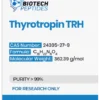
$36.00
Triptorelin (GnRH) peptides are synthesised and lyophilised in the USA.
Triptorelin (GnRH) (2mg): Exploring the Science Behind a Powerful Hormonal Signalling Peptide
Triptorelin (GnRH) (2mg) is a synthetic gonadotropin-releasing hormone (GnRH) agonist studied extensively in reproductive endocrinology, hormone signalling, and pituitary physiology. Its molecular structure is derived from naturally occurring GnRH, but specific modifications give triptorelin a different pharmacological profile and longer activity than native GnRH.
Triptorelin has become an important subject in research because of its ability to interact with the GnRH receptor, influencing the release of luteinizing hormone (LH) and follicle-stimulating hormone (FSH).
For researchers exploring Triptorelin 2mg, understanding the relationship between GnRH receptors, pituitary signalling, and the hypothalamic-pituitary-gonadal axis is essential.
This guide examines the science behind triptorelin, its mechanism of action, research applications, and frequently asked questions.
1. What Is Triptorelin? Discover the Science Behind a Modified GnRH Analogue
Triptorelin is a synthetic peptide analogue of gonadotropin-releasing hormone. Native GnRH is produced by specialised neurons within the hypothalamus and normally released in pulses.
These pulses stimulate the pituitary gland to release LH and FSH.
Triptorelin is designed to interact with the same general receptor system but has structural modifications that alter its stability and biological activity.
This makes triptorelin an important compound for studying GnRH receptor pharmacology and reproductive hormone regulation.
The 2mg designation refers to the stated amount of material in a particular preparation. It is a measurement of mass and should not be interpreted as a recommended dosage or administration schedule.
Understanding the HPG Axis
The reproductive endocrine system can be represented as:
Hypothalamus → GnRH → Pituitary → LH/FSH → Gonads → Sex hormones
This is commonly known as the hypothalamic pituitary gonadal (HPG) axis.
Triptorelin acts at the GnRH receptor, providing researchers with an opportunity to investigate how stimulation of this receptor affects downstream hormonal signalling.
2. The Fascinating Triptorelin Mechanism: Why GnRH Receptor Signalling Matters
The most important feature of triptorelin is its activity at the GnRH receptor.
Native GnRH is normally released intermittently. The pituitary responds to this pulsatile signalling by producing LH and FSH.
GnRH agonists such as triptorelin can produce a more sustained receptor stimulus.
This creates an important pharmacological distinction between short-term stimulation and prolonged receptor activation.
The Initial Hormonal Response
When a GnRH agonist interacts with pituitary GnRH receptors, LH and FSH secretion can initially increase.
This phenomenon is commonly described as an initial stimulation or flare.
Researchers study this response to better understand the relationship between GnRH receptor activation and pituitary gonadotropin secretion.
What Happens With Sustained Exposure?
With continued GnRH receptor stimulation, the pituitary can become less responsive to the signal.
This process involves changes in receptor signalling and downstream endocrine activity.
Consequently, prolonged exposure to GnRH agonists can produce a markedly different hormonal environment from the initial response.
This characteristic is one of the reasons triptorelin has significant research and clinical pharmacology relevance.
3. Triptorelin and Reproductive Endocrinology: Exploring LH, FSH, and Sex Hormones
Triptorelin provides researchers with a useful model for studying the regulation of reproductive hormones.
Triptorelin and LH
Luteinizing hormone (LH) plays important roles in reproductive physiology.
In females, LH participates in follicular development and ovulatory processes. In males, LH stimulates testosterone production by specialised cells in the testes.
Because GnRH receptor activity influences LH secretion, triptorelin can be studied within the broader framework of reproductive hormone regulation.
Triptorelin and FSH
Follicle-stimulating hormone (FSH) is another major pituitary gonadotropin.
In females, FSH contributes to ovarian follicle development. In males, it participates in processes supporting sperm production.
Studying triptorelin therefore allows researchers to examine how changes in GnRH signalling affect both LH and FSH.
Triptorelin and Sex Hormone Regulation
LH and FSH influence the gonads, which produce sex hormones including testosterone, estrogen, and progesterone.
This creates a feedback system between the brain, pituitary, and reproductive organs.
Triptorelin research helps scientists understand how altering GnRH receptor stimulation can modify this endocrine communication network.
4. Triptorelin (GnRH) (2mg): Research Applications and Important Quality Considerations
A preparation labelled Triptorelin (GnRH) 2mg indicates a stated quantity of two milligrams.
For scientific research, however, quantity is only one factor to consider.
Researchers evaluating peptide materials may examine:
- Molecular identity
- Peptide sequence
- Purity
- Certificate of analysis
- Batch information
- Analytical characterization
- Formulation
- Stability
- Storage requirements
These characteristics can be especially important when conducting receptor binding, pharmacological, or endocrine experiments.
Triptorelin and Pituitary Research
The pituitary gland plays a central role in regulating several endocrine systems.
Because GnRH receptors are expressed on pituitary gonadotroph cells, triptorelin provides researchers with a way to investigate pituitary responses to GnRH receptor stimulation.
Studies may examine changes in LH and FSH secretion and downstream endocrine signalling.
Triptorelin and Puberty Research
GnRH signalling is fundamental to the biological processes underlying puberty.
The activation of pulsatile GnRH secretion is associated with increased LH and FSH production, eventually influencing gonadal hormone production.
GnRH analogues such as triptorelin have therefore been important subjects in research concerning the timing and regulation of reproductive maturation.
Clinical applications involving GnRH analogues require careful medical supervision and are distinct from general research use.
Why Peptide Characterisation Matters
Experimental work depends on reproducibility.
Researchers need to know whether the material being studied has the expected molecular identity and purity.
Analytical documentation can help characterise a research preparation and distinguish it from unrelated peptides or degraded material.
A stated milligram quantity alone cannot establish purity, biological activity, safety, or clinical effectiveness.
5. The Future of Triptorelin Research: A Window Into Hormonal Control
Triptorelin illustrates how modifying a naturally occurring peptide can dramatically change its pharmacological behaviour.
Its interaction with the GnRH receptor provides researchers with an important model for studying:
- Pituitary signaling
- LH and FSH regulation
- Reproductive endocrinology
- HPG axis function
- GnRH receptor pharmacology
- Hormonal feedback mechanisms
- Reproductive development
Research into GnRH analogues continues to contribute to a broader understanding of how the brain communicates with the endocrine system.
Triptorelin vs. Natural GnRH
Although triptorelin is derived from the GnRH concept and acts at the GnRH receptor, it is not identical to naturally occurring GnRH.
Native GnRH has a short biological duration and is normally released in pulses.
Triptorelin has structural modifications that alter its pharmacological characteristics.
This difference is crucial when interpreting scientific literature involving GnRH and GnRH analogues.
Triptorelin vs. GnRH Antagonists
GnRH agonists and GnRH antagonists work differently.
Triptorelin is a GnRH agonist, meaning it activates the GnRH receptor.
GnRH antagonists, by contrast, are designed to block receptor activation.
This distinction results in different patterns of endocrine response and is important in pharmacology and reproductive research.
Frequently Asked Questions About Triptorelin (GnRH) (2mg)
What is Triptorelin?
Triptorelin is a synthetic GnRH agonist that interacts with GnRH receptors and has been extensively studied in reproductive endocrinology and pituitary hormone regulation.
What does Triptorelin 2mg mean?
Triptorelin 2mg refers to a preparation containing a stated amount of two milligrams. The quantity represents mass and does not indicate a recommended dose.
What receptor does Triptorelin target?
Triptorelin primarily acts through the gonadotropin-releasing hormone receptor, located on pituitary gonadotroph cells.
What are LH and FSH?
LH and FSH are pituitary gonadotropins. They regulate important aspects of reproductive physiology and influence the function of the ovaries and testes.
What happens when Triptorelin activates the GnRH receptor?
GnRH receptor activation can initially stimulate LH and FSH release. With sustained agonist exposure, pituitary responsiveness can decrease, producing a different hormonal response.
Is Triptorelin the same as natural GnRH?
No. Triptorelin is a synthetic analogue of GnRH with structural modifications that alter its pharmacological properties.
Is Triptorelin a GnRH agonist?
Yes. Triptorelin is classified as a GnRH agonist.
Is Triptorelin a hormone?
Triptorelin is a synthetic peptide analogue of the naturally occurring GnRH hormone. It acts through the same general receptor system but has modified pharmacological characteristics.
What is the HPG axis?
The hypothalamic-pituitary-gonadal axis is the endocrine communication network linking the hypothalamus, pituitary gland, and reproductive organs.
Is Triptorelin used in medical research?
Yes. Triptorelin has been extensively studied in reproductive endocrinology, pituitary physiology, GnRH receptor pharmacology, and hormone regulation.
Is Triptorelin approved as a medicine?
Triptorelin has approved medical uses in certain countries and formulations, but regulatory status varies by jurisdiction and indication. A research preparation should not be assumed to be an approved pharmaceutical product.
Is Triptorelin safe for personal use?
Triptorelin is a potent hormonal drug and should not be treated as a general-purpose research supplement. Human use requires appropriate medical evaluation, a suitable pharmaceutical formulation, and professional supervision.
What should researchers look for when evaluating Triptorelin?
Researchers may examine molecular identity, sequence confirmation, purity, certificate of analysis, batch information, analytical characterisation, formulation, stability, and storage requirements.
Final Thoughts on Triptorelin (GnRH) (2mg)
Triptorelin (GnRH) (2mg) is an important synthetic peptide analogue for understanding GnRH receptor signalling, pituitary function, reproductive hormones, and the HPG axis.
Its pharmacological behaviour demonstrates the complexity of endocrine signalling. While native GnRH is released in carefully regulated pulses, a modified GnRH agonist such as triptorelin can produce a distinct pattern of receptor stimulation and downstream hormonal responses.
For researchers evaluating Triptorelin 2mg, molecular identity, purity, analytical characterisation, formulation, stability, and batch documentation are important considerations.
Because triptorelin directly influences the reproductive endocrine system and is used clinically in specific settings, it should be distinguished from ordinary peptide research materials. It should not be presented as a product for unsupervised personal use.
Ongoing research on triptorelin offers valuable insight into one of endocrinology’s most remarkable systems: the communication pathway linking the brain, pituitary gland, reproductive organs, and circulating hormones.
Brand
Biotech Peptides
Be the first to review “Triptorelin (GnRH) (2mg)”
Related products
PEPTIDES
PEPTIDES
PEPTIDES

PEPTIDES
PEPTIDES

PEPTIDES
PEPTIDES

PEPTIDES
Reviews
There are no reviews yet.