
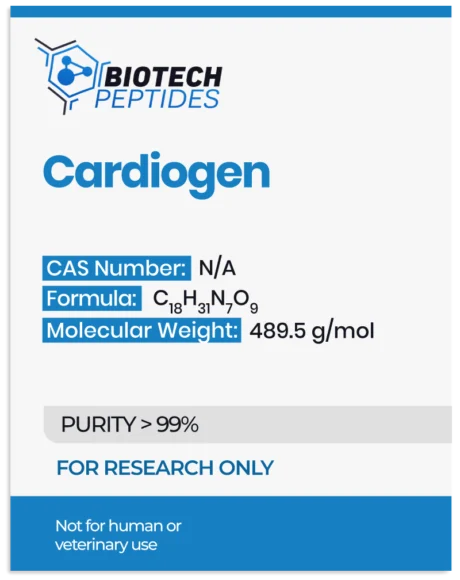
Cardiogen (20mg)
$60.00
Cardiogen peptides are synthesised and lyophilised In the USA
Exploring the Science Behind This Experimental Bioregulator
Cardiogen (20mg) is an experimental peptide bioregulator that has attracted interest in research focused on cardiovascular biology, cellular signalling, tissue function, and age-related biological processes.
Cardiogen belongs to a group of short peptide bioregulators that have been investigated for their potential relationship with tissue-specific cellular activity. Research into these compounds has developed from the broader field of peptide biology and the study of short signalling peptides.
The cardiovascular system is highly complex. It involves the heart, blood vessels, endothelial cells, connective tissue, and many interconnected signalling pathways. Researchers continue to investigate how peptide signaling may influence cellular function within these systems.
If you are researching Cardiogen 20mg, this guide explains what Cardiogen is, why it is scientifically interesting, potential areas of research, and the quality factors worth considering when evaluating an experimental peptide.
Research disclaimer: Cardiogen is an experimental research peptide. It should not be presented as an approved treatment for heart disease, cardiovascular conditions, or aging. This content is intended for educational and research purposes.
1. What Is Cardiogen? Meet the Experimental Peptide Bioregulator
Cardiogen is generally described as a short peptide bioregulator associated with research into cardiovascular tissue.
Peptide bioregulators are small peptide sequences studied for their possible role in cell-specific signalling and tissue regulation.
The concept behind tissue specific peptide research is that certain short peptides may interact with biological processes associated with particular tissues.
Cardiogen is therefore of interest within experimental research involving cardiovascular biology.
Understanding Cardiovascular Peptide Research
The cardiovascular system depends on precise communication between cells.
Heart muscle cells, endothelial cells, vascular smooth muscle cells, and other cell types constantly respond to biochemical signals.
These signals help regulate:
- Cell growth
- Cellular differentiation
- Tissue maintenance
- Blood vessel function
- Metabolic activity
- Cellular responses to stress
Researchers study peptides to better understand how these signaling systems operate.
What Does Cardiogen 20mg Mean?
Cardiogen 20mg refers to a preparation containing a stated quantity of 20 milligrams.
The 20mg designation describes the amount of material.
It does not establish a recommended dosage, treatment schedule, or therapeutic effect.
For laboratory research, the amount required depends on the experimental model and research objectives.
2. The Fascinating World of Cardiovascular Peptide Signalling
The heart is more than a mechanical pump.
It is a living tissue composed of specialized cells that communicate constantly.
Cardiovascular research therefore involves much more than studying blood pressure or heart rate.
Scientists also investigate cellular signaling, tissue structure, metabolism, oxidative stress, and regenerative processes.
Cardiogen and Cellular Signalling Research
Experimental peptide research examines how short peptide sequences may interact with cellular pathways.
Researchers may investigate whether peptide signals influence specific biological processes within cardiovascular tissues.
This can involve studying:
- Gene expression
- Protein activity
- Cellular metabolism
- Tissue maintenance
- Cellular stress responses
- Intercellular communication
These areas remain active fields of scientific research.
Why Tissue-Specific Peptides Are Interesting
Different tissues have different biological requirements.
Heart muscle cells perform different functions from skin cells or intestinal cells.
Researchers are therefore interested in whether specific peptides can interact with tissue-related signalling systems.
This idea is central to the broader field of peptide bioregulator research.
Cardiovascular Biology and Cellular Ageing
Age-related changes can affect cardiovascular tissues.
Researchers study how cells respond to accumulated stress and changing metabolic conditions.
This includes research into:
- Mitochondrial function
- Oxidative stress
- Cellular repair
- Tissue remodeling
- Gene regulation
- Cellular senescence
Cardiogen is part of the wider research conversation surrounding peptide signaling and tissue biology.
3. Cardiogen Research: Exploring Heart Tissue, Cellular Function, and Regeneration
Interest in Cardiogen peptide research is connected to the broader study of cardiovascular tissue biology.
Scientists continue to investigate how heart cells maintain their structure and function over time.
Cardiogen and Heart Tissue Research
Heart tissue has a demanding biological environment.
Cardiac muscle cells require large amounts of energy and depend heavily on mitochondrial activity.
Researchers investigate signaling pathways that influence cardiac cell function, energy production, and cellular responses to stress.
Experimental peptides provide one way to study these processes.
Cardiogen and Cellular Stress
Cells can experience stress from many sources.
These may include oxidative stress, metabolic changes, inflammation, and environmental factors.
Cardiovascular research examines how heart and vascular cells respond to these challenges.
Peptide signalling is one area scientists are exploring to understand these cellular responses.
Cardiogen and Tissue Maintenance
Healthy tissues require continuous regulation.
Cells must maintain their internal environment while responding to changing conditions.
This involves communication between cells and the surrounding extracellular environment.
Research into peptide bioregulators may help scientists investigate how short signaling molecules participate in these processes.
Important Research Limitations
Experimental findings must be interpreted carefully.
A biological effect observed in a laboratory model does not automatically translate into a proven human benefit.
Research models may include cell cultures, biochemical assays, and animal studies.
Each model provides valuable information, but none should automatically be treated as evidence of clinical effectiveness.
4. Cardiogen (20mg): Quality, Purity, and Research Considerations
When evaluating Cardiogen 20mg, researchers should consider more than the stated quantity.
The identity and quality of the peptide are equally important.
Useful product documentation may include:
- Peptide sequence
- Molecular identity
- Purity
- Molecular weight
- Certificate of analysis
- Batch information
- Analytical testing
- Stability information
- Solubility
- Storage requirements
Why Cardiogen Purity Matters
Research depends on reliable materials.
Unexpected impurities can introduce variables into an experiment.
This is especially important when researchers are investigating cellular signaling.
A certificate of analysis can provide useful batch specific information about peptide identity and purity.
However, a 20mg label alone does not establish purity, biological activity, safety, or therapeutic effectiveness.
Cardiogen Stability
Peptides may be affected by environmental conditions.
Factors such as temperature, moisture, light, pH, and repeated handling can influence stability.
Researchers should follow the storage recommendations supplied with the specific preparation.
Appropriate storage can help preserve material integrity.
Cardiogen and Laboratory Research
Researchers may study experimental peptide materials in controlled laboratory environments.
Research objectives can include understanding molecular interactions, cellular responses, and tissue-related signalling.
Proper controls and validated analytical methods are important when evaluating experimental results.
5. The Future of Cardiogen Research: Unlocking New Questions in Cardiovascular Biology
The future of peptide research continues to expand.
Scientists are increasingly interested in how small peptides interact with complex biological systems.
Cardiovascular biology provides an especially important research area because the heart and vascular system involve many interconnected cellular pathways.
Potential Areas for Future Research
Future studies may explore:
- Cardiovascular cell signaling
- Cardiac tissue biology
- Cellular stress responses
- Mitochondrial function
- Tissue maintenance
- Gene expression
- Cellular aging
- Regenerative biology
- Peptide signaling
- Tissue specific bioregulation
Why Cardiogen Is Scientifically Interesting
Cardiogen represents the broader concept of using short peptide sequences to investigate tissue-specific biological processes.
Its research value comes from the questions it can help scientists ask.
How do cells communicate?
How do tissues maintain function?
How do cardiovascular cells respond to stress?
How might peptide signaling influence these processes?
These questions continue to shape modern cellular biology.
The Bigger Picture of Peptide Bioregulators
Peptide bioregulators are part of a wider field of biological research.
Scientists study peptides because their small size allows researchers to investigate specific sequences and molecular interactions.
Understanding these interactions could provide new insight into how cells regulate themselves.
Cardiogen is one experimental example within this larger scientific field.
Frequently Asked Questions About Cardiogen (20mg)
What is Cardiogen?
Cardiogen is an experimental peptide bioregulator associated with research into cardiovascular tissue, cellular signaling, and biological regulation.
What does Cardiogen 20mg mean?
Cardiogen 20mg indicates a preparation containing a stated amount of 20 milligrams. It describes the quantity of material and does not represent a recommended dosage.
What is a peptide bioregulator?
A peptide bioregulator is a short peptide studied for its potential role in biological signaling and tissue specific cellular processes.
What is Cardiogen studied for?
Cardiogen is associated with experimental research involving cardiovascular biology, cellular signaling, tissue maintenance, and related biological processes.
Is Cardiogen a heart medication?
No. Cardiogen should not automatically be described as an approved cardiovascular medicine or treatment.
Can Cardiogen treat heart disease?
Experimental research does not establish Cardiogen as a proven treatment for heart disease or other cardiovascular conditions.
Why is cardiovascular peptide research important?
The cardiovascular system depends on complex cellular communication. Studying peptide signaling may help researchers better understand how heart and vascular cells function and respond to stress.
Is Cardiogen a peptide?
Yes. Cardiogen is described within the category of experimental peptide bioregulators.
What does Cardiogen research involve?
Research may focus on cellular signaling, tissue biology, metabolic processes, cellular stress, and cardiovascular biology.
What should researchers look for when evaluating Cardiogen 20mg?
Researchers should consider peptide identity, sequence, purity, molecular characterisation, certificate of analysis, batch information, stability, and storage requirements.
Why does peptide purity matter?
Purity can affect experimental results. Reliable materials help researchers reduce unwanted variables when studying cellular and molecular processes.
How should Cardiogen be stored?
Storage requirements depend on the specific preparation. Researchers should follow the supplier’s documented storage and handling instructions.
Is Cardiogen approved for human use?
Experimental research material should not automatically be considered an approved pharmaceutical product. Regulatory status depends on the specific product and jurisdiction.
Is Cardiogen safe for personal use?
Safety cannot be assumed from experimental research. Research materials should not automatically be considered suitable for personal use or self-administration.
Final Thoughts on Cardiogen (20mg)
Cardiogen (20mg) represents an interesting area of experimental peptide research focused on cardiovascular biology, cellular signaling, tissue maintenance, and biological regulation.
The cardiovascular system depends on sophisticated communication between many specialized cell types. Understanding these signals can help researchers investigate how tissues maintain function and respond to biological stress.
Cardiogen is part of the broader field of peptide bioregulator research. Scientists continue to explore how short peptide sequences may interact with specific cellular pathways and tissue environments.
When evaluating Cardiogen 20mg, researchers should look beyond the quantity listed on the label. Peptide identity, sequence, purity, analytical documentation, stability, batch information, and storage conditions are important considerations.
As research into peptide signaling continues to develop, experimental compounds such as Cardiogen may help researchers explore new questions about cellular communication and cardiovascular tissue biology.
Small peptides can raise big scientific questions. Cardiogen offers another fascinating window into the complex world of cellular signaling and cardiovascular research.
Brand
Biotech Peptides
Be the first to review “Cardiogen (20mg)”
Related products
PEPTIDES
PEPTIDES
PEPTIDES

PEPTIDES
PEPTIDES
PEPTIDES
PEPTIDES
PEPTIDES
Reviews
There are no reviews yet.