

Exploring the Science Behind an Experimental Signalling Peptide
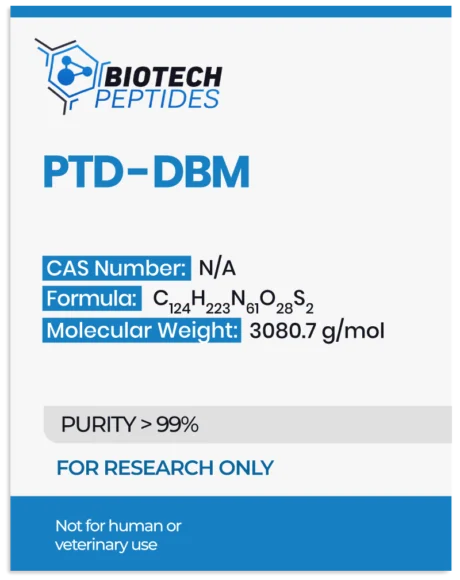
PTD-DBM (5mg) is an experimental research compound that has attracted interest in molecular biology, signalling pathways, tissue research, and cellular regulation. PTD-DBM For Sale
PTD-DBM is associated with research involving the Dishevelled-binding motif (DBM) and cellular signalling mechanisms connected to the Wnt pathway. Researchers study these pathways because they play important roles in cell communication, development, tissue maintenance, and cellular behaviour.
The Wnt signalling network is one of the most studied systems in modern molecular biology. It is involved in processes ranging from embryonic development to tissue homeostasis.
PTD-DBM provides researchers with an experimental tool for investigating specific molecular interactions within this complex signalling environment.
If you are researching PTD-DBM 5mg, this guide explains what the compound is, why DBM-related signalling is important, its potential research applications, and the quality factors researchers should consider.
Research disclaimer: PTD-DBM is an experimental research material. Research interest does not establish it as an approved medicine or treatment. This information is intended for educational and laboratory research purposes.
1. What Is PTD-DBM? Meet the Experimental Molecule Behind Wnt Signalling Research
PTD-DBM is a research compound associated with a cell-penetrating peptide component and a Dishevelled-binding motif.
The DBM component is particularly interesting because Dishevelled proteins are important intracellular regulators within Wnt signalling.
Wnt signalling involves a large network of proteins that communicate information between cells and their internal machinery.
This pathway can influence:
- Cell proliferation
- Cell differentiation
- Tissue development
- Stem cell biology
- Tissue regeneration
- Cellular organization
Because Wnt signalling has such broad biological functions, researchers carefully investigate individual components of the pathway.
What Does the PTD Component Mean?
PTD generally refers to a protein transduction domain.
Protein transduction domains are short peptide sequences that researchers study for their ability to facilitate cellular entry of molecular cargo.
This concept is particularly useful in experimental research because many biological molecules have limited ability to cross cell membranes on their own.
Combining a PTD with another functional sequence can provide researchers with a way to investigate intracellular targets.
What Does PTD-DBM 5mg Mean?
The term PTD-DBM 5mg refers to a preparation containing a stated quantity of five milligrams.
The 5mg designation describes the amount of material. It does not represent a recommended dosage or treatment protocol.
For laboratory research, the required quantity depends on the experimental design.
2. The Fascinating PTD-DBM and Dishevelled Connection
One of the most interesting aspects of PTD-DBM research is its relationship with Dishevelled, commonly abbreviated as DVL.
Dishevelled proteins are important signalling proteins involved in Wnt pathway regulation.
They act downstream of Wnt receptors and participate in several signalling processes.
Understanding the Wnt Pathway
The Wnt pathway is a complex communication system.
Wnt proteins can bind to receptors on the cell surface and trigger intracellular signalling events.
These signals can influence how cells behave.
There are several Wnt signalling routes, including:
- Canonical Wnt signalling
- β-catenin dependent signaling
- Non-canonical Wnt signalling
Each pathway can produce different cellular responses.
Why Dishevelled Matters
Dishevelled proteins help transmit signals from Wnt receptors into the cell.
Because of this role, Dishevelled is an important research target.
Studying specific regions or interactions involving Dishevelled can help researchers understand how Wnt signalling is regulated.
PTD-DBM is interesting within this context because the DBM sequence is designed around a Dishevelled-binding interaction.
3. PTD-DBM Research: Exploring Cellular Signalling and Tissue Biology
Researchers are interested in Wnt signalling because it influences many biological processes.
The pathway has important roles during development and throughout adult tissue maintenance.
PTD-DBM and Cellular Signalling Research
Cell signalling depends on carefully controlled molecular interactions.
A signal may begin at the cell surface and then move through a series of intracellular proteins.
Dishevelled is one component of this signalling network.
Experimental compounds that interact with specific signaling proteins can help scientists investigate how these pathways function.
PTD-DBM provides a research model for studying these interactions.
Wnt Signalling and Cell Development
Wnt signalling plays an important role in embryonic development.
It helps regulate processes such as:
- Cell fate
- Tissue patterning
- Differentiation
- Growth
- Development
Because these processes are highly complex, Wnt signalling remains an important field of developmental biology.
Wnt Signalling and Adult Tissues
Wnt pathways also remain active in adult tissues.
They participate in tissue maintenance and cellular renewal.
Researchers investigate Wnt signalling in areas such as:
- Stem cell biology
- Intestinal tissue research
- Bone biology
- Skin biology
- Regenerative research
- Cancer biology
This broad range of applications explains why experimental Wnt pathway modulators continue to attract scientific attention.
Why Experimental Models Matter
A signalling pathway can behave differently depending on the cell type and biological environment.
A result observed in one laboratory model may not occur in another.
This makes careful experimental design essential.
Researchers must consider factors such as cellular context, concentration, exposure conditions, controls, and pathway specificity.
4. PTD-DBM (5mg): Quality, Purity, and Research Considerations
When evaluating PTD-DBM 5mg, researchers should look beyond the stated quantity.
Experimental peptide materials require careful characterisation.
Important information may include:
- Peptide sequence
- Molecular identity
- Purity
- Molecular weight
- Certificate of analysis
- Batch information
- Stability
- Solubility
- Storage conditions
These details can help researchers determine whether the material is appropriate for a specific experiment. PTD-DBM For Sale
Why PTD-DBM Purity Matters
Purity is important when studying signalling pathways.
Unexpected impurities or degradation products may influence experimental observations.
A certificate of analysis can provide batch-specific information about the material.
Researchers should review available analytical documentation rather than relying only on a product label.
A 5mg quantity does not independently establish purity, biological activity, or safety.
PTD-DBM Stability
Peptide-based research materials can be affected by environmental conditions.
Factors such as temperature, moisture, light, pH, and repeated handling may influence stability.
Researchers should follow the storage and handling instructions provided for the specific preparation.
Proper storage can help maintain material consistency throughout a research project.
Research Material vs. Medical Product
PTD-DBM should be described accurately as an experimental research compound.
Laboratory research and pharmaceutical development follow different standards.
A compound showing an interesting result in a research model does not automatically become an approved treatment. PTD-DBM For Sale
This distinction is especially important when discussing compounds associated with major biological pathways such as Wnt signalling.
5. The Future of PTD-DBM Research: Unlocking the Complexity of Wnt Biology
Wnt signalling continues to be one of the most fascinating areas of molecular biology.
Researchers are still discovering how Wnt proteins, receptors, Dishevelled, β-catenin, and other signalling molecules work together.
Experimental tools such as PTD-DBM can help researchers examine individual components of these networks.
Future research may explore:
- Dishevelled signaling
- Wnt pathway regulation
- Protein-protein interactions
- Cell differentiation
- Stem cell biology
- Tissue development
- Cellular regeneration
- Cancer signaling
- Intracellular peptide delivery
Why PTD-DBM Continues to Attract Interest
PTD-DBM brings together two interesting concepts.
The first is intracellular delivery through a protein transduction domain.
The second is targeted investigation of Dishevelled related signaling through a DBM sequence.
This combination makes PTD-DBM an intriguing research tool for studying intracellular signalling.
The Bigger Picture
Modern molecular biology increasingly focuses on understanding individual interactions within complex signalling networks.
Rather than studying a pathway as one system, researchers can examine specific protein interactions and determine how they influence downstream events.
PTD-DBM fits into this approach.
By studying specific Dishevelled-related interactions, researchers can explore how Wnt signalling is organised and regulated.
Frequently Asked Questions About PTD-DBM (5mg)
What is PTD-DBM?
PTD-DBM is an experimental research compound associated with a protein transduction domain and a Dishevelled-binding motif. It is studied in relation to intracellular signalling and Wnt pathway biology.
What does PTD-DBM 5mg mean?
PTD-DBM 5mg indicates a preparation containing a stated amount of five milligrams. It is a measurement of material and does not represent a recommended dosage.
What does DBM stand for?
DBM refers to a Dishevelled-binding motif, a sequence associated with interactions involving Dishevelled signalling proteins.
What is Dishevelled?
Dishevelled, or DVL, is a group of intracellular signalling proteins that play an important role in Wnt pathway regulation.
What is the Wnt pathway?
Wnt signalling is a network of cellular communication pathways involved in processes such as development, cell differentiation, proliferation, tissue maintenance, and stem cell biology. PTD-DBM For Sale
What is a protein transduction domain?
A protein transduction domain, or PTD, is a peptide sequence studied for its ability to facilitate the movement of molecular cargo into cells.
Why is PTD-DBM studied?
PTD-DBM provides researchers with an experimental tool for investigating Dishevelled-related signalling and intracellular molecular interactions.
Is PTD-DBM a peptide?
PTD-DBM is generally described as a peptide-based experimental research compound because it contains peptide sequences designed around intracellular delivery and Dishevelled interaction.
Is PTD-DBM related to Wnt signalling?
Yes. Its research interest is connected to Dishevelled, an important component of Wnt signalling.
What areas of research involve Wnt signalling?
Wnt signalling is studied in developmental biology, stem cell research, tissue biology, regeneration research, bone biology, intestinal biology, and cancer research.
What should researchers look for when evaluating PTD-DBM 5mg?
Researchers should consider the peptide sequence, purity, molecular identity, certificate of analysis, batch information, stability, solubility, and storage requirements.
Is PTD-DBM an approved medical treatment?
PTD-DBM is an experimental research compound. It should not be described as an approved medical treatment. PTD-DBM For Sale
Is PTD-DBM safe for personal use?
Safety cannot be assumed from experimental research. A research compound should not automatically be considered suitable for personal use or self-administration.
Why does peptide purity matter?
Purity can affect experimental results. Researchers need reliable and well-characterised materials to reduce unwanted variables in laboratory studies.
Final Thoughts on PTD-DBM (5mg)
PTD-DBM (5mg) is an intriguing experimental research compound connected to Dishevelled signalling, Wnt pathway biology, intracellular peptide delivery, and molecular research.
Its scientific interest comes from the combination of a protein transduction domain with a Dishevelled-binding motif. This provides researchers with a useful model for investigating specific intracellular protein interactions.
The Wnt pathway plays important roles in development, cell differentiation, tissue maintenance, and cellular signalling. Understanding individual components of this pathway can therefore provide valuable insight into broader biological processes.
When evaluating PTD-DBM 5mg, researchers should consider more than the stated quantity. Peptide sequence, purity, molecular identity, analytical documentation, stability, and storage conditions are all important. PTD-DBM For Sale
As research into cellular signalling continues to evolve, experimental compounds such as PTD-DBM may help scientists investigate the complex molecular interactions that control how cells communicate and respond.
A targeted research tool. A fascinating signalling pathway. A closer look at the molecular world of Wnt and Dishevelled biology.
Brand
Biotech Peptides
Be the first to review “PTD-DBM (5mg)”
Related products
PEPTIDES

PEPTIDES

PEPTIDES

PEPTIDES
PEPTIDES
PEPTIDES
PEPTIDES

PEPTIDES
Reviews
There are no reviews yet.